
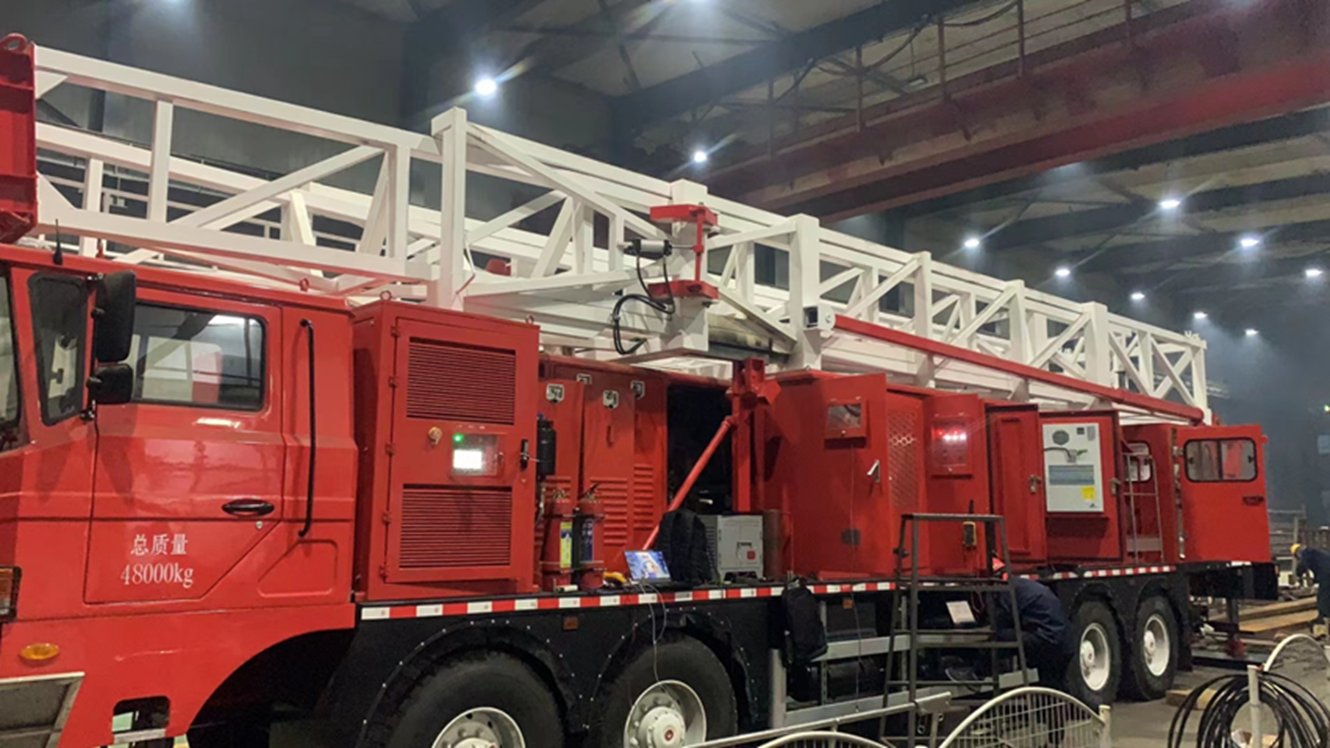
Workover rigs are core equipment in oil fie
 (Energy Management System)
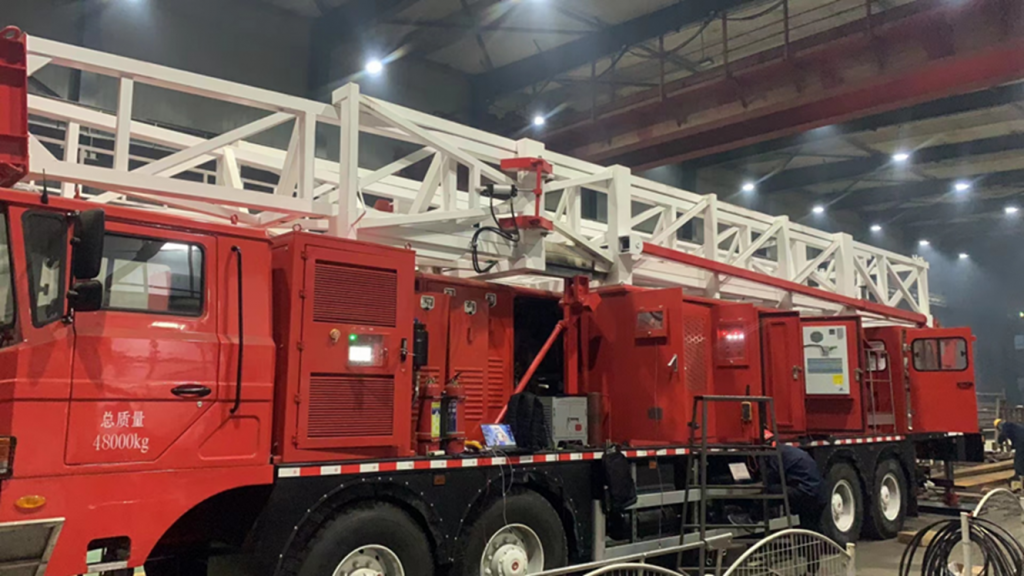
Today, most still run on diesel engines. But this leads to three big issues: high energy use, heavy pollution, and loud noise. These problems conflict with China’s “dual carbon” (carbon peak, carbon neutrality) goals. So, electrifying and upgrading workover rigs has become the main trend for future energy transition in the oil industry.
1. Early Electrification Attempt: Grid-Power Rigs Face Limitations
The first step toward electrification was using grid power. Take a 70t grid-powered workover rig as an example:
- Its motor needs a total of 240kW power.
- But wellhead transformers are usually only 50kVA or 75kVA—way too small to meet demand.
- To fix this, you’d need a 200kVA transf
- ormer. This adds costs and creates safety risks.
These issues have seriously held back the promotion of grid-powered workover rigs.
Figure 1: Power demand vs. sta

ndard wellhead transformer capacity for grid-powered workover rigs
2. Innovation: Adding Battery Storage to Overcome Challenges
To solve the grid-power problem, customers added battery energy storage devices to existing grid-powered workover rigs. This serves two key purposes: expanding capacity and co
mpensating for power gaps.
By using the complementarity
of grid power and battery storage, the rigs now support three working modes:
- Independent power supply (battery only)
- Grid power supply (grid only)
- Joint power supply (grid + battery)
This not only makes power supply more reliable but also cuts energy use and pollution. It perfectly aligns with the “dual carbon” goals.
3. How the Storage-Equip
ped Rig Works: Intermittent Cycles & Smart Power Management
Workover rig operations revolve around oil pipes—each pipe needs to be connected or unloaded. Every connection/unloading process forms a cycle, so the rig’s work is intermittent by nature.
The rig has four main working conditions:
- Lifting (high power demand)
- Shackle (low power demand)
- Pipe laying (medium power demand)
- Lowering (low power demand)
Figure 2: Power demand curve for the four main workover rig conditions
The storage-equipped rig uses DC bus voltage control technology to work in parallel with the wellhead transformer. Combined energy from the grid and battery pack fully meets operation needs—and is more efficient than traditional diesel rigs.
Here’s how power is managed in each condition:
- Lifting (high power): Grid PCS modules and battery DCDC modules power the variable-frequency motor together. This ensures enough power for heavy lifting.
- Shackle (low power): Grid PCS modules pow
- er the motor alone. Excess grid power charges the battery via DCDC modules.
- Lowering (low power): Excess grid power charges the battery (via PCS + DCDC). Also, the motor acts as a generator during lowering—potential energy is converted to electricity and stored in the battery (via DCDC).
4. Project Case: Liaoning Panjin Oilfield 60kW/194.5kWh Storage System
Project Overview
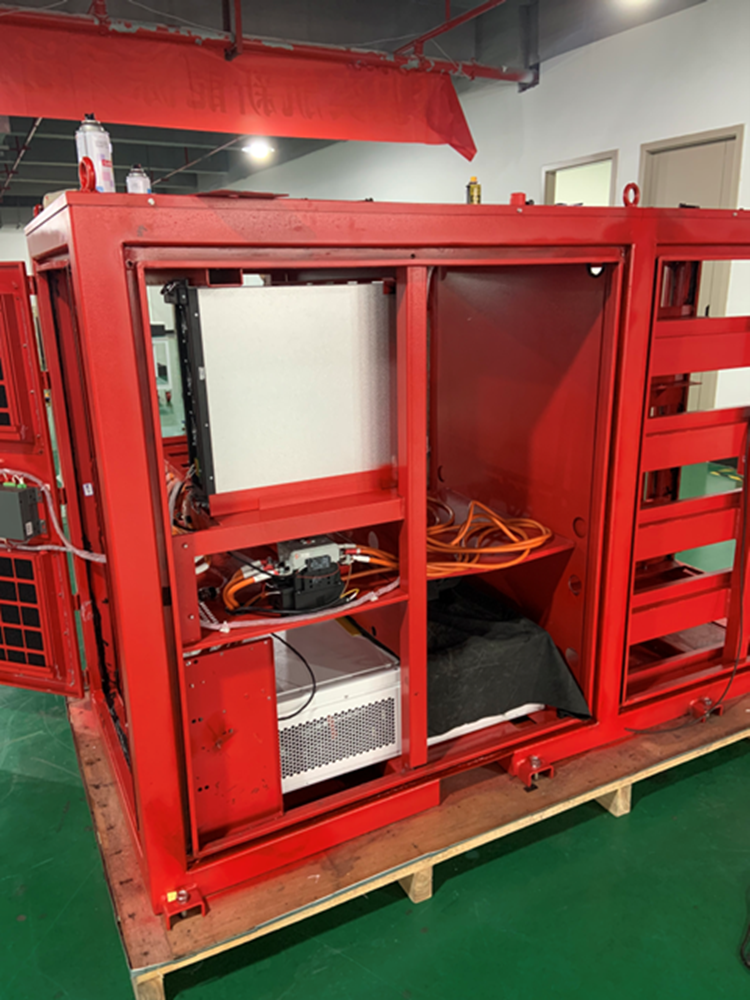
- Name: Liaoning Panjin Oilfield Workover Rig 60kW/194.5kWh Energy Storage System
- Supplied Products: 1x 60kW PCS, 4x 60kW DCDC, 1x EMS
 igh starting current and strong impact)
 igh starting current and strong impact)
- Key Features: Dynamic capacity expansion, maximum 2C discharge rate
Why This Project Succeeds
- Dynamic Capacity Expansion: The rig uses “grid + multi-drive + DC storage” to make up for the wellhead transformer’s insufficient capacity and power.
- High-Performance Modules: YUNT Energy’s PCS and DCDC modules have:
- Fast response speed
- Strong overload capacity (critical for the rig’s winch motor, which has h
- Strong grid adaptability
- High Discharge Rate: Paired with high-rate batteries, the storage system supports up to 2C discharge—matching the rig’s peak power needs.
Project Benefits
- Makes full use of on-site power distribution resources
- Enables multi-mode power supply for all workover needs
- Reduces battery charging/discharging impact on the grid
- Protects the grid while cutting emissions
5. Conclusion: Storage-Driven Electrification Is the Future
Adding battery storage to workover rigs solves the key limitations of grid-powered systems. It eliminates the need for expensive transformer upgrades, cuts pollution, and aligns with “dual carbon” goals.
YUNT Energy’s PCS, DCDC, and EMS solutions play a critical role in this transition—their performance and reliability make them ideal for oilfield applications. As the oil industry moves toward greener operations, storage-equipped electric workover rigs will become the new standard.