
STS Static Transfer Switch: A Complete Guide for Uninterrupted Power Supply

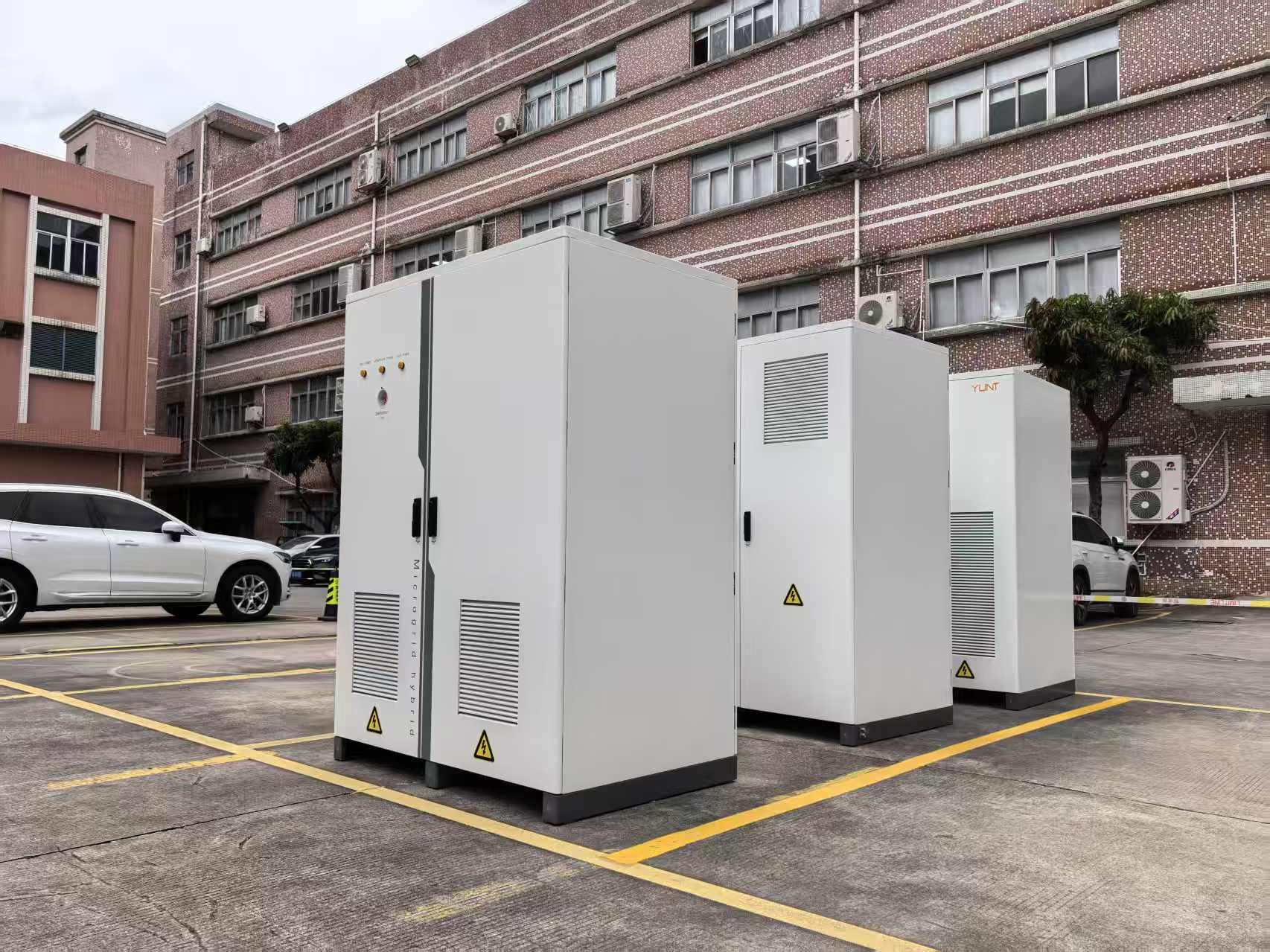
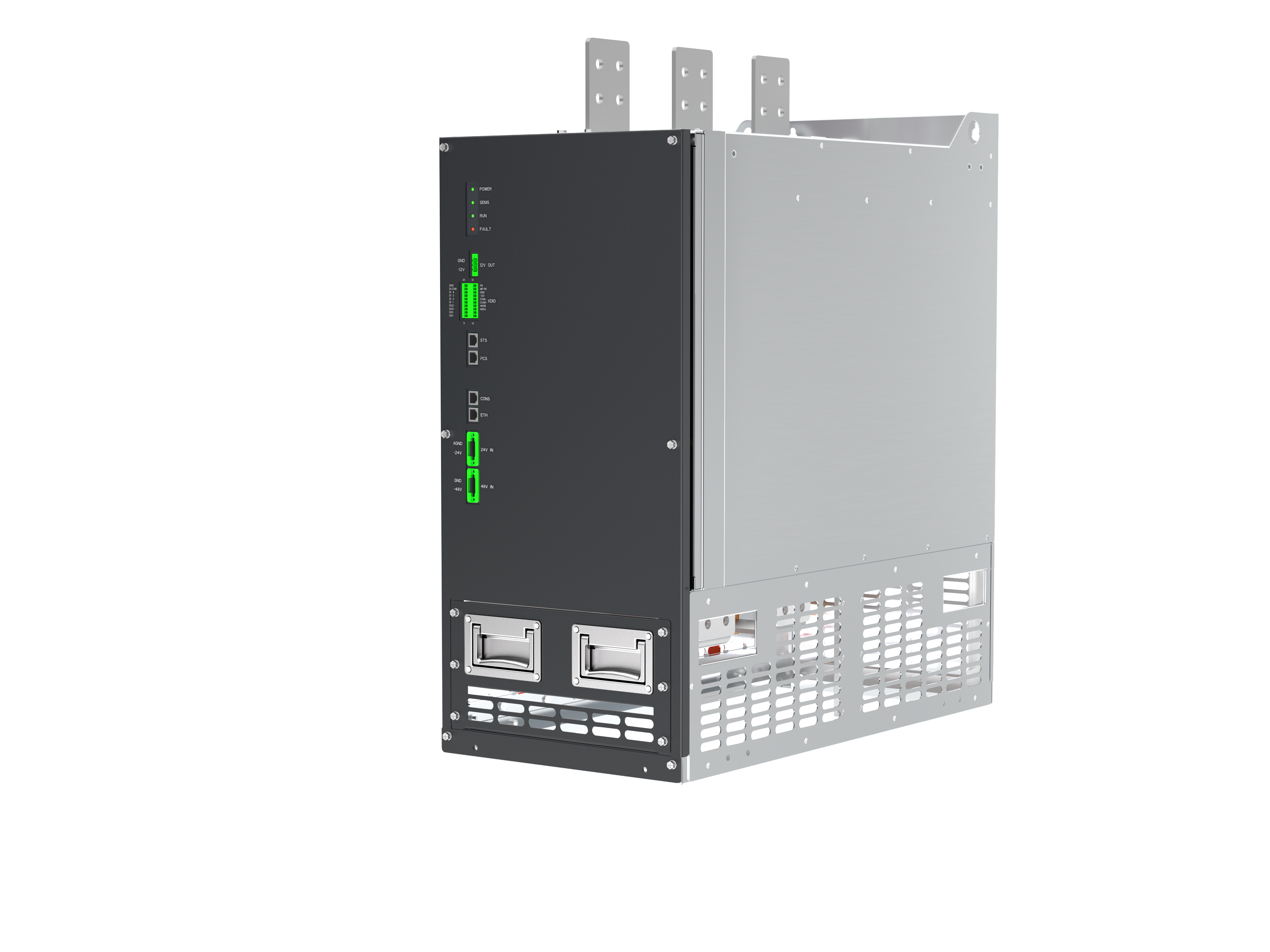
1MV sts
This guide details the STS Static Transfer Switch, including its definition, working principle, core features, application scenarios, and key differences from ATS.

1. What is an STS Static Transfer Switch?

YUNT Power 1MV STS
YUNT Power 1MV STS
An STS Static Transfer Switch is an automatic two-way power switching system designed to ensure continuous power supply for critical loads.
It automatically selects between a primary power source and a backup power source based on the power status.
  • Normal Operation: When the primary power source maintains a normal voltage range, the load stays connected to it.
  • Fault Response: If the primary power source fails (e.g., voltage drop, outage), the load is instantly switched to the backup power source.
  • Recovery Switching: Once the primary power source resumes normal operation, the load switches back automatically.

Simple Analogy: It functions like a laptop’s power system. Normally, the laptop uses 220V AC power via an adapter (primary power).
If the AC power cuts off, the laptop switches to its built-in battery (backup power) to avoid data loss. When AC power is restored, it reverts to adapter power.
 

2. Working Principle of STS

STS is engineered for uninterrupted switching (<8ms) between two synchronized three-phase AC power sources.
The voltage amplitude, frequency, and phase difference of the two sources must stay within acceptable limits to ensure safe operation.
Key operational rules include:
  1. Power Source Configuration: Users can set either input as the “primary” or “backup” power source via the control panel.
    Switching only occurs if the primary power fails or a manual reset is initiated.
  2. Switching Mode: Adopts a “Break before Make” mechanism (disconnect the old source first, then connect the new one).
    This prevents inrush current between sources and completes switching in ≤8ms, avoiding downtime for IT loads.
  3. Overcurrent Protection: If the load current exceeds the preset threshold (due to inrush or overload),
    STS will not switch sources even if the primary power voltage is abnormal. It resets automatically once the current returns to normal.
  4. Device Monitoring: STS continuously monitors the status of Silicon Controlled Rectifiers (SCRs). If an SCR short-circuits or opens, STS triggers an alarm and isolates the faulty circuit to ensure safety.
  5. Maintenance Bypass: It is equipped with an interlocked manual bypass switch. During maintenance, users can switch to the bypass to keep the load powered while isolating the STS for safe repairs.

3. Core Features of STS

STS stands out for its reliable protection and intelligent control capabilities, with three key features:
  • Over-Voltage/Under-Voltage Protection: Automatically switches to the backup power source when the input AC voltage is too high or too low, preventing damage to connected equipment.
  • Intelligent Detection: Real-time monitors the status of both power sources. If one source fails (including manual switching), it immediately switches to the other to maintain uninterrupted power.
  • Intelligent Alarm: Triggers an automatic alarm when the device experiences a power outage or exceeds operating limits, prompting timely maintenance and troubleshooting.

4. Application Scenarios of STS

STS is widely used in scenarios where power interruptions are unacceptable, as it ensures continuous power for critical equipment:
  • Data centers and communication rooms (to protect servers and network devices from downtime)
  • Automatic control systems in the power industry
  • Power supply systems in the petrochemical industry
  • Automatic control and security systems in smart buildings
  • Other occasions with important equipment sensitive to power outages

5. Key Differences Between STS and ATS
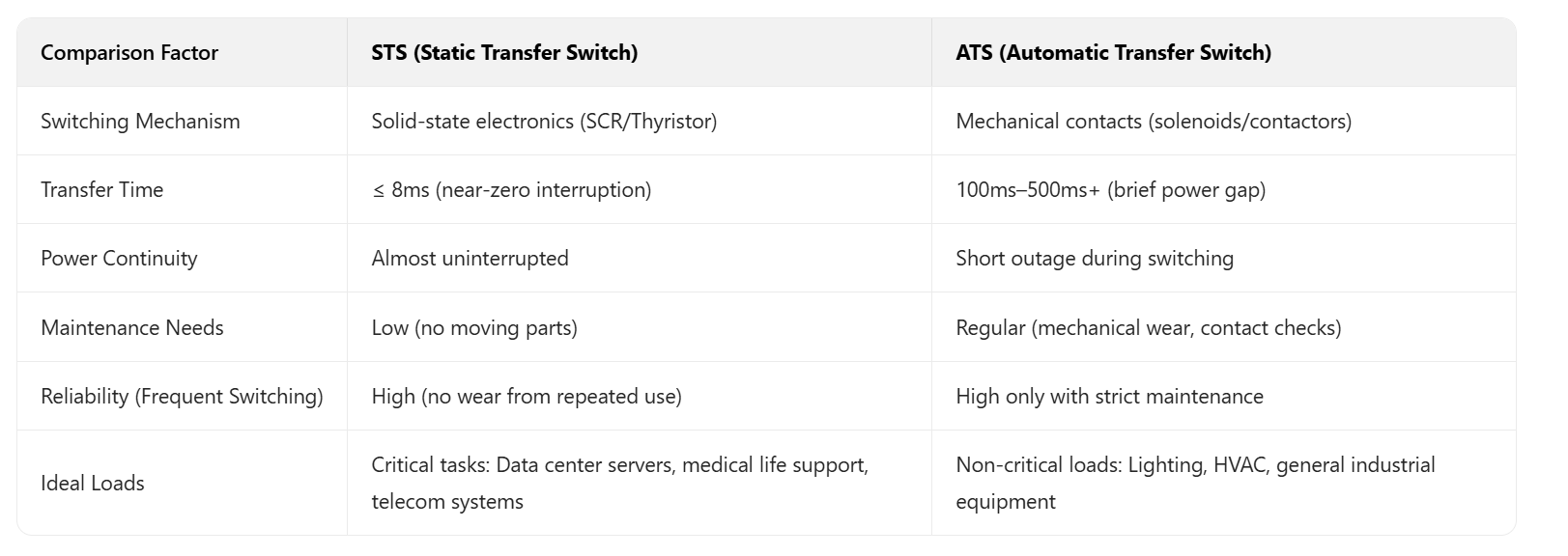
STS and ATS both serve power switching purposes, but they differ significantly in performance and application scenarios.
The table below clarifies their core distinctions: