
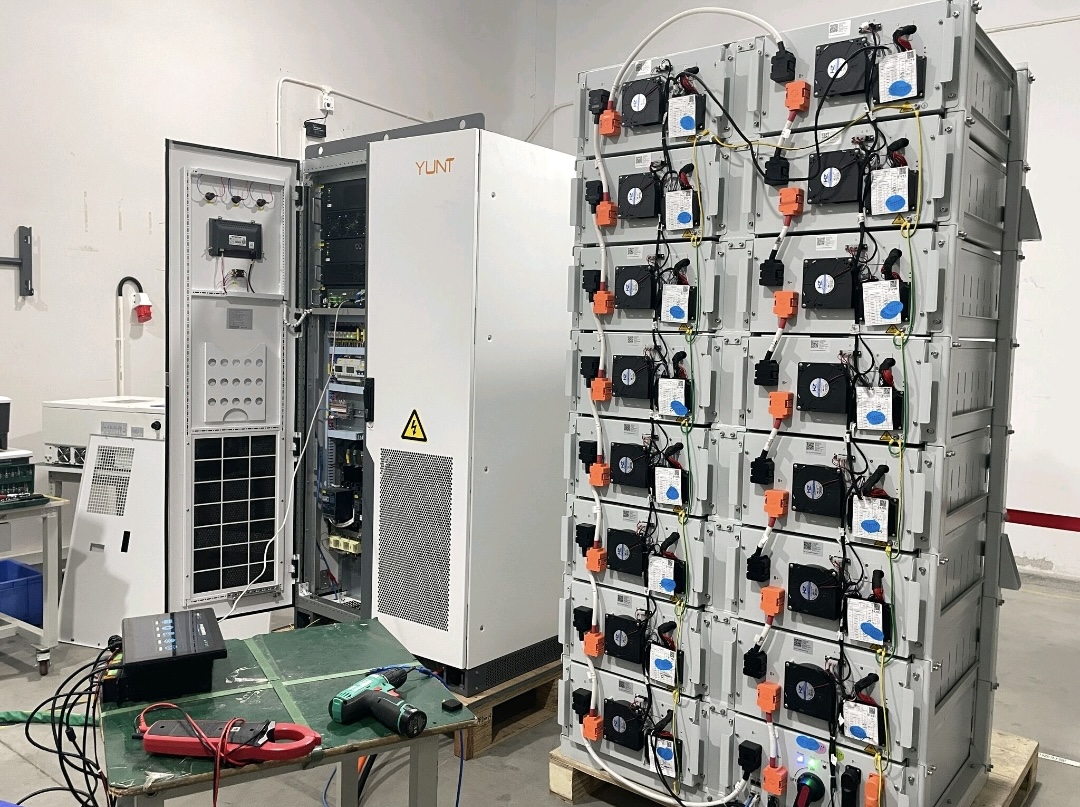
This article explains how YUNT Power’s Virtual Synchronous Generator (VSG) technology solves the stability problems caused by large-scale solar and wind power integration worldwide. It breaks down the unique strengths of YUNT Power’s VSG products, real-world applications across countries, and future innovation plans—showing why YUNT Power is key to building stable, renewable-heavy power systems.
Table of Contents
Toggle1. Global Grid Problems: Why YUNT Power VSG Is a Must-Have
Solar and wind power are now leading the global energy shift, but they bring three big stability risks to grids:
- Traditional grid-following inverters lack “inertia” and “damping,” so grid frequency and voltage often fluctuate—threatening safe operation.
- Renewable energy clusters (like wind or solar parks) use independent voltage control systems with messy, uncoordinated strategies. This wastes power and reduces efficiency.
- Weak grid areas (such as remote regions or offshore wind substations) can’t add more clean energy because they don’t have enough stability support.
YUNT Power spotted these issues early and built VSG solutions tailored to global grid needs. Our products mimic the reliable support of traditional generators while fitting the flexibility of renewable systems. They directly fix problems like poor grid support, weak anti-disturbance ability, and limited renewable integration—making YUNT Power a trusted partner for utilities, power producers, and microgrid operators around the world.
2. Core Strengths of YUNT Power VSG Products: Better Than Conventional Tech
YUNT Power’s VSG solutions combine exclusive hardware designs and innovative algorithms, giving them three key advantages that stand out globally:
2.1 Patented Adaptive Inertia & Damping Control
YUNT Power’s VSG uses our own “Dynamic Inertia Smart Adjustment System” (a patented technology) to automatically optimize two key parameters—virtual inertia (J) and damping coefficient (D)—based on real-time grid conditions.
- When power fluctuates suddenly (like a sudden drop in wind), the system temporarily boosts inertia to stop frequency spikes and voltage swings.
- When the grid runs steadily, it fine-tunes damping to speed up response—solving the “either stable or fast” trade-off that bugs traditional VSGs.
- This means our products work reliably in both weak grids (e.g., remote solar farms) and dense renewable clusters (e.g., European offshore wind parks).
2.2 Wide Compatibility & Fast Deployment
YUNT Power’s VSG products are built for global use, with two big perks for on-site teams:
- Broad Compatibility: They work seamlessly with mainstream energy equipment worldwide—including solar inverters (SMA, Fronius), wind turbines (Vestas, Siemens Gamesa), and energy storage systems (lithium-ion, flow batteries).
- Plug-and-Play Design: They have a universal communication interface that supports IEC 61850, Modbus, and DNP3 protocols. This lets them connect directly to existing grid control systems, cutting on-site modification costs by 25% and shortening deployment time by 30% compared to industry averages.
2.3 Fault Ride-Through That Meets Global Grid Rules
YUNT Power’s VSG complies with strict grid codes worldwide (like Germany’s BDEW, U.S. FERC Order 841, and Australia’s AEMO rules) thanks to:
- A fast fault detection module that responds in less than 2ms. It instantly spots issues like voltage drops, short circuits, or frequency anomalies.
- Customizable fault response curves. We tweak these to match local grid requirements, so the product stays connected during faults and provides reactive power to help the grid recover faster.
3. Global Application Cases: YUNT Power VSG in Action
YUNT Power’s VSG solutions are now used in over 15 countries across North America, Europe, and Oceania. Here are three real-world examples:
3.1 U.S. Arizona: 500 MW Solar + Storage Project (2023)
- The Problem: A big power producer’s 500 MW solar farm in Arizona could only connect 350 MW to the grid—because the local grid lacked inertia. This cost them about $8 million in lost annual revenue.
- YUNT’s Solution: We supplied 100 MW/200 MWh battery storage systems with built-in VSG. Our adaptive inertia control stabilized frequency, and the universal interface linked smoothly to the local utility’s control system.
- The Result: The solar farm now uses its full 500 MW capacity. Frequency fluctuations dropped by 82% in the first 6 months, and the customer got back their lost revenue in just 1.5 years.
3.2 Norway: Remote Island 20 MW Hybrid Microgrid (2022)
- The Problem: A 20 MW microgrid (12 MW wind + 5 MW solar + 3 MW diesel) on a Norwegian island had over 12 hours of outages every year. Most happened in winter—when wind dropped suddenly and diesel generators started too slowly.
- YUNT’s Solution: We installed a 5 MW VSG controller with 10 MWh battery storage. The VSG kept voltage and frequency stable during wind dips, and its fault response ensured no power cuts when switching to diesel.
- The Result: Annual outages dropped to less than 1 hour. Diesel use fell by 40% (fewer backup starts), cutting carbon emissions by about 120 tons per year.
3.3 Germany: North Sea 1.2 GW Offshore Wind Cluster (2024, Ongoing)
- The Problem: A European utility’s 1.2 GW offshore wind cluster needed to meet Germany’s BDEW grid code—requiring inertia support, reactive power supply, and fault response in under 50ms.
- YUNT’s Solution: We’re supplying 300 MW VSG-based power conversion systems (PCS) for the onshore substation. The PCS works with wind turbine controls to coordinate power output and stabilize the grid connection.
- Progress: Phase 1 (400 MW wind + 100 MW YUNT VSG PCS) launched in Q2 2024. Early data shows frequency stays within ±0.1Hz—fully meeting BDEW’s rules.
4. Future Plans: YUNT Power Leads Next-Gen VSG Innovation
To keep up with global renewable energy growth, YUNT Power is focusing on three key R&D areas:
- AI-Powered VSG 2.0: We’re adding machine learning to predict grid disturbances (like sudden drops in solar power) and adjust VSG parameters ahead of time—cutting response time to less than 1ms.
- Multi-Energy Coordination: We’re developing VSG controllers that work with hydrogen electrolyzers and EV charging stations. This turns scattered energy resources into “virtual power plants” that help balance grid peaks and regulate frequency.
- Global Standardization: We’re working with international groups (like IEC and IEEE) to help set VSG technical standards. This ensures our products stay compatible with changing grid rules in every region.