
In today’s high-capacity manufacturing landscape, industrial parks are shifting from passive utility consumers to active microgrid operators. Rapid electrification, combined with rising demand charges and grid volatility, has turned power management into a critical factor for operational profitability. When a factory floor runs multi-megawatt robotic assembly lines and automated CNC machinery, even brief voltage fluctuations or sudden power restrictions can cause catastrophic production halts. To combat these external grid pressures, forward-thinking EPC contractors and park developers are integrating advanced energy storage systems (BESS). At the heart of these resilient systems is the power conversion hardware. Working with a leading digital power innovator like YUNT allows industrial developers to implement intelligent, high-density energy management architectures that shield operations from grid disturbances while maximizing overall facility efficiency.
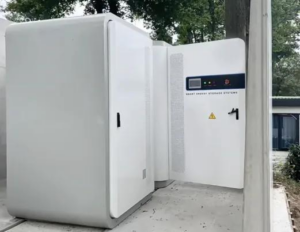
One of the most persistent hurdles in modernizing factories is substation capacity. When facilities expand production lines or introduce high-power EV charging networks, the local utility substation often cannot support the peak surge. Upgrading physical utility transformers is notorious for high capital expenditures and years of permitting delays. An on-site energy storage microgrid solves this challenge through dynamic capacity expansion. By utilizing an advanced bidirectional power module, the microgrid acts as a dynamic power buffer. During peak demand periods, the module seamlessly discharges stored energy to support localized peak loads, preventing the industrial park’s power consumption from exceeding its grid connection threshold. This active load management bypasses expensive substation overhauls, allowing EPCs to execute expansion projects on accelerated timelines.
Partnering with a Bidirectional Power Module Supplier for Peak-Valley Arbitrage
While securing grid resilience protects against downtime, the driving force behind modern energy storage adoption is financial return. Industrial facilities operate under heavy utility tariffs and peak-demand penalty structures. By implementing a sophisticated energy storage strategy, commercial operations can transition from defensive power backup to active profit generation via peak-valley electricity price optimization. This strategy charges the facility’s battery arrays during off-peak night hours when utility rates are at their lowest and discharges the stored electricity during high-rate peak periods to run non-critical machinery.
Success in high-capacity energy arbitrage relies heavily on hardware performance. Choosing an experienced bidirectional power module supplier ensures that energy losses during these frequent charge-and-discharge cycles are minimized. YUNT designs its Power Conversion System (PCS) modules with a peak efficiency of 98.90% and an advanced three-level topology. For an industrial park managing megawatt-scale daily cycles, even a fractional percentage increase in conversion efficiency translates directly to thousands of dollars saved annually. This high-efficiency performance dramatically shortens the payback period for the entire microgrid investment, turning the power infrastructure into a self-funding business asset.
Technical Resiliency in Complex Industrial Environments
Deploying sensitive digital power electronics directly onto factory floors or within outdoor commercial utility substations requires robust engineering. Industrial parks are high-vibration zones characterized by airborne dust, fluctuating humidity, and extreme temperature shifts. Under these demanding conditions, traditional electromechanical switching devices suffer from contact degradation and mechanical wear, necessitating frequent maintenance downtime. Modern solid-state power modules address this by eliminating mechanical contacts entirely. These non-friction designs deliver stable power conversion under the harshest working conditions, ensuring reliable operation throughout the asset’s lifecycle.
To meet these environmental challenges, YUNT power conversion modules are engineered with high power density, surpassing industry competitors by 30% to 40%. This compact footprint simplifies cabinet layout and reduces spatial requirements in tightly packed substation switchrooms. Supported by intelligent air or liquid cooling systems and wide operating temperature ranges, these modules maintain high-performance output without thermal derating. Additionally, with authoritative compliance certifications covering more than 20 countries, project developers and global distributors can deploy this architecture worldwide, confident in meeting strict regional grid codes and local safety standards.
Streamlining System Integration and Modular Expansion
For energy storage system integrators and EPC contractors, speed of deployment is just as critical as hardware reliability. Custom engineering from scratch can delay projects for months, compounding opportunity costs. Standardized, modular design is the answer to this bottleneck. By using plug-and-play modules (such as 100kW or 125kW configurations), system developers can scale overall system capacity incrementally from hundreds of kilowatts to multi-megawatt configurations. This modular flexibility allows industrial facilities to phase their capital investments, scaling their power backup systems in direct alignment with real tenant expansion.
Beyond physical modularity, the integrated control layer must support advanced system networking. High-performance modules feature built-in Virtual Synchronous Generator (VSG) technology. This capability allows the decentralized microgrid to simulate the inertia of a traditional synchronous machine, stabilizing local voltage and frequency during transition phases. If the public utility experiences a complete grid failure or sudden load shedding, the system executes an off-grid transition instantly. This guarantees that precision automated assembly lines, high-draw HVAC units, and critical IT server rooms keep operating without a single reboot cycle or data corruption event.
Secure Custom Engineering for Your Facility’s Microgrid
Optimizing energy flow, avoiding steep utility demand charges, and safeguarding sensitive industrial machinery from grid instability requires a specialized approach. Off-the-shelf equipment cannot adapt to the complex load profiles of modern factories. Partnering with a dedicated engineering provider ensures that your power conversion infrastructure is built to survive the rigors of heavy industry. Contact our team today to analyze your facility’s specific load profiles and receive a customized microgrid topology with a formal quote within 72 hours.