
The explosive growth of high-density cloud computing and AI workloads has pushed data center power infrastructure to its absolute limits. Modern server arrays, often drawing upwards of 30 kW per rack, require massive, continuous, and highly stable electricity flows. Historically, facilities relied on diesel backup generators and traditional, short-duration lead-acid UPS setups to handle grid anomalies. However, as environmental regulations tighten and carbon taxes rise, relying on diesel generation is no longer sustainable or financially viable. Furthermore, modern grids are increasingly volatile, experiencing voltage sags and power restrictions that can corrupt valuable data. To mitigate these risks, forward-thinking EPC contractors and data center developers are partnering with YUNT to integrate advanced microgrid architectures. By transitioning to localized, high-performance battery arrays, mission-critical facilities can establish robust protection against utility instability while turning their backup assets into highly profitable energy management engines.
Bypassing Substation Upgrades via Energy Storage System Solutions
One of the most persistent bottlenecks in expanding existing data centers or building new ones is physical substation capacity. Requesting a capacity increase from the local utility provider often involves a grueling administrative and engineering process, frequently taking anywhere from eighteen to twenty-four months of permitting, grid impact studies, and civil work. This delay can stall major computing projects, costing operators millions in delayed contract executions.
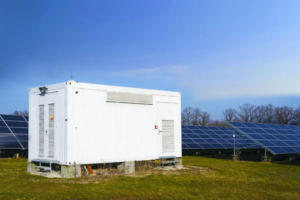
Integrating modern energy storage system solutions directly at the facility’s point of common coupling bypasses this physical grid constraint. Instead of waiting for utility transformer upgrades, developers can install modular, high-capacity battery storage systems to act as a dynamic power buffer. These storage systems charge continuously during periods of low computational activity and discharge rapidly to support server racks during peak load spikes. This localized peak-shaving capability enables data center operators to execute dynamic capacity expansion immediately, matching their electrical infrastructure directly with computing demands without incurring major capital expenditure delays.
Financial Optimization: Shaving Demand Charges and Peak Arbitrage
Beyond securing operational continuity, integrating battery arrays transforms a facility’s electrical infrastructure from a pure cost center into an active profit generator. Data centers operate around the clock, consuming vast sums of electricity and facing heavy utility penalties. Commercial utility tariffs are heavily structured around peak-demand charges, calculated based on the highest fifteen-minute spike in a monthly billing cycle.
By deploying intelligent commercial energy storage solutions, developers can actively flatten their demand curve. When computational loads spike—such as during high-intensity batch processing or model training—the intelligent control layer monitors consumption in real time and seamlessly discharges stored energy to cap the facility’s grid draw.
Additionally, this system architecture enables data centers to capitalize on peak-valley pricing arbitrage. The battery banks charge automatically during off-peak night hours when utility tariffs are at their lowest, and discharge that cheap power during high-rate daytime windows. This active load-shifting strategy bypasses peak utility tariffs, translating directly into thousands of dollars in monthly operational savings. By utilizing this dual-purpose approach, facility operators can rapidly recover their microgrid capital expenditures, turning their critical backup systems into self-funding business assets.
Rugged Engineering and High-Density Architecture for Mission-Critical Facilities
Integrating sensitive power electronics into the high-stakes environment of a data center requires hardware designed for high reliability and spatial efficiency. Data center floor space is extremely valuable; every square meter occupied by electrical infrastructure is a square meter that cannot hold high-revenue server racks.
To address this space constraint, YUNT designs its modular power conversion modules with an impressive power density that exceeds standard industry alternatives by 30% to 40%. This ultra-compact footprint allows EPC contractors to package maximum power capacity into tight switchrooms or outdoor containerized enclosures.
Furthermore, these power systems deliver an industry-leading peak conversion efficiency of 99%. This high efficiency keeps heat generation to an absolute minimum, which is a vital factor in data centers where thermal management is a primary driver of operating expenses. Built with a non-friction, solid-state architecture, these systems effectively remove the need for physical electromechanical contacts. This design prevents contact wear, degradation, and potential failure points under continuous daily charge and discharge cycles, reducing maintenance requirements and ensuring consistent uptime.
Engineered with a broad operating temperature range from -40°C to +60°C and heavy-duty ingress protection, these power conversion systems maintain peak performance in any external climate. Backed by compliance certifications covering more than twenty countries, global developers and distributors can deploy this architecture worldwide, confident that it meets strict grid compliance codes and safety standards.
Collaborate with YUNT for Custom Microgrid Topologies
Eliminating grid vulnerability and protecting high-value computing assets from electrical anomalies requires specialized, site-specific engineering. Generic, off-the-shelf equipment cannot adapt to the complex load profiles, variable utility tariffs, and tight spatial constraints characteristic of modern data center complexes.
The dedicated technical R&D team at YUNT, comprised of highly qualified power electronics engineers with strong academic backgrounds, is ready to analyze your facility’s operational data, grid limitations, and local tariff structures. Our team can deliver customized microgrid topologies, comprehensive ROI projections, and formal pricing quotes tailored to your project. Reach out to the YUNT engineering department today to design a robust, high-efficiency power architecture that safeguards your computational assets, ensures continuous operational uptime, and maximizes your long-term return on investment.