
In high-throughput manufacturing, power infrastructure is the foundation of operational continuity. Yet, as industrial facilities expand, integrating high-draw machinery, automated assembly lines, and high-speed fleet EV charging networks, they quickly run up against grid limitations. Local utility grids are increasingly volatile, plagued by frequent power restrictions and voltage sags that can instantly derail complex industrial operations. To insulate facility assets from these external grid pressures, EPC contractors and microgrid system developers are shifting away from rigid, single-point power architectures. They are choosing modular, distributed energy storage systems that can scale on demand. At the forefront of this industrial transition, YUNT provides high-density, highly responsive power conversion hardware that enables facilities to build resilient, future-proof microgrids capable of dynamic capacity expansion.
The Capital Expense Dilemma of Substation Capacity Constraints
When a manufacturing facility adds new production lines, the immediate engineering challenge is substation capacity. Traditional physical substation overhauls—including transformer upgrades, permits, civil engineering, and utility approvals—are notoriously slow, often delaying project implementation timelines by eighteen to twenty-four months. Furthermore, the upfront capital expenditure of these upgrades can severely undermine project ROI.
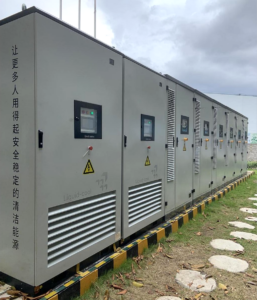
An energy storage system addresses this bottleneck through peak shaving and localized capacity expansion. Instead of drawing massive peak surges directly from the utility grid, the system utilizes high-speed energy storage arrays to buffer localized peak loads. This approach allows EPC contractors and project developers to scale operations immediately, bypassing utility delays. By choosing a modular architecture, facility operators can match their power infrastructure investment directly to current operational needs, reserving the flexibility to expand capacity as operational demand grows.
Maximizing Footprint Value with High-Density Power Conversion Modules
Industrial switchrooms and substation enclosures are high-value real estate. Maximizing energy throughput per square meter is a core priority for EPCs and system integrators. This is where advanced power conversion modules deliver a decisive competitive advantage, offering a power density that surpasses standard industry alternatives by 30% to 40%.
This compact footprint radically simplifies cabinet layout and thermal design, allowing system builders to package more power capacity into tighter switchroom configurations. However, high power density is meaningless without extreme conversion efficiency. Power conversion losses degrade system ROI and generate excessive heat, shortening the lifespan of battery arrays. Engineered with an advanced three-level topology, these systems deliver an exceptional conversion efficiency of 99%. For an industrial park operating continuous daily cycles, this high-efficiency performance minimizes thermal dissipation and maintains continuous output without thermal derating, ensuring optimal operation in demanding commercial scenarios.
Phased Deployment: Scaling with Flexible PCS Modules
For energy storage system integrators, the speed and flexibility of system commissioning determine project success. Relying on custom, centralized inverters requires bespoke engineering for every site, a process that limits long-term adaptability. In contrast, standardizing on a plug-and-play PCS module design allows project developers to scale system capacity incrementally.
By using standardized modular configurations—such as 100kW or 125kW units—system builders can stack individual modules in parallel within a single cabinet. This architecture supports a broad spectrum of projects, enabling smooth scaling from hundreds of kilowatts to multi-megawatt configurations. Standardized modules ensure high project implementation efficiency and stable delivery schedules. When a factory adds a new production line, technicians can simply slot additional modules into the existing rack framework. This hot-swappable, modular scaling approach eliminates extensive rewiring, system re-engineering, and prolonged operational downtime.
Additionally, these stackable modules feature built-in Virtual Synchronous Generator (VSG) technology. This capability allows the microgrid to simulate physical grid inertia. During a sudden utility blackout, the modules execute an off-grid transition instantly, maintaining stable local voltage and frequency. This helps support continuous operation of precision automated assembly lines while reducing the risk of unexpected interruptions.
Engineering for Harsh Industrial Environments
Deploying sensitive digital power electronics into heavy industrial environments demands exceptional hardware durability. Factory floors and outdoor commercial substations are high-stress areas characterized by constant vibration, airborne dust, and extreme temperature shifts. Under these conditions, traditional electromechanical switching devices suffer from contact degradation and mechanical wear, necessitating frequent maintenance downtime.
Modern solid-state power modules address this by eliminating physical mechanical contacts entirely. This non-friction design delivers stable power conversion under the harshest working conditions, ensuring reliable operation throughout the asset’s lifecycle. Supported by wide operating temperature ranges from -40°C to +60°C and robust ingress protection ratings, these systems deliver continuous, high-performance power output in any climate. Furthermore, with compliance certifications covering more than twenty countries, global distributors can deploy this architecture worldwide, confident in meeting strict regional grid codes.
Partner with YUNT for Site-Specific Microgrid Scaling
Optimizing energy flow and preparing your power infrastructure for future expansion requires specialized, site-specific engineering. Off-the-shelf equipment cannot adapt to the complex load profiles and dynamic pricing structures of heavy industry. Contact YUNT to analyze your facility’s operational load profiles, grid constraints, and local tariff structures to deliver customized microgrid topologies and formal pricing quotes.