
As electric vehicle (EV) adoption accelerates globally, commercial property developers, logistics parks, and retail complex operators are facing an unprecedented infrastructure challenge. Adding high-power DC fast-charging plazas to a commercial property is no longer just a premium tenant amenity; it is a vital competitive necessity. However, when multiple vehicles plug into 150kW or 350kW fast chargers simultaneously, they create massive, unpredictable spikes in electricity demand. These sudden load surges strain local utility grid capacity and expose facility operators to astronomical peak-demand charges. To turn this grid-level bottleneck into a high-yield asset, forward-thinking EPC contractors and commercial developers are partnering with YUNT to implement advanced microgrid configurations. By integrating localized power conversion hardware, property owners can safeguard their facilities from grid constraints while establishing a highly profitable, self-sustaining energy ecosystem.
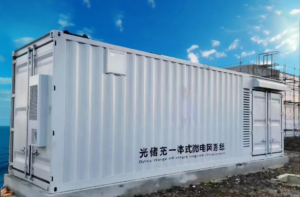
The Grid Constraint Dilemma: Why Charging Stations Need High-Performance ESS Energy Storage Solutions
When an industrial or commercial site seeks to deploy a multi-point EV charging network, the initial engineering bottleneck is almost always the existing substation capacity. Traditional grid infrastructure was never designed to handle the localized, multi-megawatt spikes associated with modern fleet electrification. Requesting a physical substation expansion from the local utility provider is a notoriously slow and expensive process, often requiring eighteen to twenty-four months of permitting, civil engineering, and substantial upfront capital outlay. This prolonged timeline can halt development plans and severely damage project ROI.
Integrating modular ESS energy storage solutions directly into the charging infrastructure bypasses this grid bottleneck entirely. Instead of pulling massive peak currents directly from the utility grid during a charging session, the system uses high-speed battery arrays to buffer the localized load. The storage assets charge slowly and continuously during periods of low activity, then discharge rapidly to support fast-charging vehicles. This peak-shaving capability allows EPCs and system integrators to deploy high-draw charging infrastructure immediately, maximizing the property’s power capacity without waiting for utility transformer upgrades or incurring costly infrastructure overhaul delays.
Peak-Valley Arbitrage and Demand-Charge Mitigation with Commercial Energy Storage Systems
Beyond resolving physical grid capacity constraints, combining storage with EV charging unlocks significant financial returns. Commercial utility contracts are heavily structured around peak-demand charges—often calculated based on the single highest fifteen-minute spike in a billing cycle. A single simultaneous fleet-charging event can instantly double or triple a commercial property’s monthly utility bill.
By deploying advanced commercial energy storage systems, facility operators can actively manage these demand charges. The intelligent control layer monitors total site consumption in real time. When EV charging loads threaten to push the facility’s power draw past a predetermined threshold, the storage system seamlessly discharges stored energy to cap the grid draw.
Furthermore, this integrated microgrid architecture enables sophisticated peak-valley electricity price optimization. The system charges its battery arrays during off-peak night hours when utility rates are at their lowest, and discharges that low-cost energy during peak daytime windows when local utility tariffs skyrocket. When vehicles charge during high-tariff periods, they are powered by the stored, cheap electricity, allowing property developers to capture cost savings from the price difference. This direct transformation of utility volatility into predictable operational savings dramatically accelerates the payback period for the entire microgrid investment.
Technical Resiliency: Engineering for High-Draw EV Charging Ecosystems
Implementing high-power charging networks alongside digital power electronics requires robust hardware engineered to survive demanding conditions. Charging plazas are dynamic environments characterized by continuous cycling, high thermal generation, and outdoor environmental exposure. Choosing low-efficiency or fragile hardware can lead to thermal derating, frequent maintenance shutdowns, and lost revenue.
To ensure continuous operational uptime, YUNT designs its power conversion hardware with a market-leading peak conversion efficiency of 99%. This ultra-high efficiency keeps energy loss to an absolute minimum, ensuring that practically all power is delivered directly to the vehicle batteries rather than dissipating as waste heat. Furthermore, these advanced modules feature a power density that surpasses standard industry alternatives by 30% to 40%. This compact footprint is a game-changer for space-constrained commercial properties, allowing developers to pack maximum power capacity into tight switchrooms or outdoor substation enclosures.
Built with a rugged, non-friction solid-state architecture, these power systems reduce reliance on physical electromechanical contacts. This design prevents contact degradation and mechanical wear under continuous daily charge and discharge cycles, drastically reducing lifetime maintenance costs. Engineered with an impressive operating temperature range spanning from -40°C – +60°C and heavy-duty ingress protection, these systems deliver stable performance in any climate. Backed by compliance certifications covering more than twenty countries, global project developers can deploy this infrastructure worldwide, confident in meeting strict regional utility grid codes and safety standards.
Partner with YUNT for Site-Specific EV-ESS Integration
Capitalizing on the EV charging transition while protecting your facility’s electrical infrastructure requires specialized, site-specific engineering. Off-the-shelf equipment cannot adapt to the unique load profiles, local utility tariffs, and spatial constraints of high-density commercial properties.
The experienced technical R&D team at YUNT, comprised of highly qualified power electronics engineers with strong academic backgrounds, is ready to analyze your facility’s specific power profiles, grid limitations, and local tariff structures. Contact our team today to receive customized microgrid topologies, optimized ROI projections, and formal pricing quotes tailored to your project.