
Industrial and commercial enterprises along coastal zones face a difficult balancing act. Coastal industrial parks and factories are high-energy consumers battling rising grid tariffs, unstable power, and unexpected restrictions. Meanwhile, the marine atmosphere is highly destructive to the electrical infrastructure required to manage these utility challenges. To secure operational continuity and execute profitable peak-valley arbitrage, project developers are increasingly deploying on-site microgrids. However, safeguarding these capital investments requires specialized hardware. Leading EPCs look to engineered solutions from YUNT to protect power quality and ensure the long-term viability of their assets in demanding maritime regions.
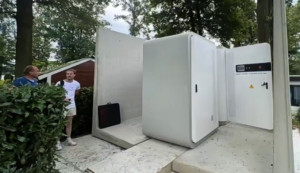
At the core of any resilient microgrid is the power electronics managing the flow of electricity between the battery array and the local facility network. Selecting standard outdoor cabinets without considering atmospheric conditions leads to premature failure. To achieve the necessary durability, developers must specify a highly ruggedized power conversion cabinet that is structurally and thermally isolated from the corrosive sea breeze, ensuring uninterrupted performance over a multi-decade operational lifespan.
The Commercial Reality of Salt-Mist Corrosion on Coastal Storage ROI
When evaluating energy storage projects in coastal environments, financial stakeholders must view technical specifications through the lens of return on investment (ROI). Marine air saturated with conductive sodium chloride deposits salt crusts on printed circuit boards, high-voltage terminals, and control systems, causing rapid galvanic corrosion and short circuits. For an industrial facility, unexpected equipment shutdown triggers immediate financial losses. If the energy storage asset goes offline, the facility loses its ability to perform peak-valley electricity price optimization, forcing it to draw expensive power from the utility during peak hours. Furthermore, unexpected hardware failures leave critical manufacturing lines vulnerable to power dropouts. To protect the project’s economic model, procurement officers and technical engineers must prioritize hardware designed to completely isolate sensitive electronics from the surrounding atmosphere.
Maximizing Substation Efficiency and Local Grid Support
Coastal factories and industrial facilities are often situated at the absolute edge of regional utility grids, where power quality is unstable and susceptible to weather-induced fluctuations. In these scenarios, the microgrid must do more than store bulk energy; it must actively stabilize the local network and provide peak shaving capabilities. Substation dynamic capacity expansion allows industrial operators to scale up operational limits without expensive utility transformer upgrades. Achieving this level of grid support under harsh environmental conditions requires exceptional research and development depth. Modern systems integrate proprietary off-grid and network construction technology, developed by R&D teams with strong expertise in power electronics and energy storage applications. This advanced design achieves an outstanding conversion efficiency of 99%, ensuring that energy loss during charging and discharging cycles is minimized. Furthermore, a modular design offering power density 30% to 40% higher than traditional alternatives maximizes energy capacity in tight footprints, ensuring rapid deployment.
Strategic Operational Maintenance and Global Compliance
Operating a high-power energy storage site in an aggressive coastal industrial park demands rigid quality assurance and systematic preventive maintenance. Before procurement, technical engineers must verify that equipment has undergone extensive salt mist and high-humidity thermal testing. Hardware carrying compliance certifications from over 20 countries guarantees that the system meets the highest international standards of durability and grid compatibility, reducing barriers to global market access. Once deployed, operations teams should implement a structured, data-driven preventive maintenance schedule. Technicians should inspect external enclosure seals, clean air filters, and leverage remote monitoring to track real-time thermal performance. Sensor-driven monitoring allows operators to detect subtle moisture ingress or temperature anomalies early, resolving minor issues before they escalate into costly system downtime.
Secure Your Coastal Microgrid Assets
Coastal climates leave no margin for error. Implementing standard power electronics in high-salinity zones will rapidly degrade your hardware, turning a strategic energy asset into an expensive maintenance liability. Protecting your ROI and securing grid independence requires robust, engineered solutions. Selecting a durable PCS power conversion system with robust isolation is paramount to safeguarding long-term performance. Our fast-response engineering capabilities deliver fully customized microgrid solutions within 72 hours, perfectly tailored to your local grid standards and specific environmental challenges. Contact the YUNT engineering team today to request a customized microgrid quote and safeguard your coastal industrial operations against power instability and high demand charges.