
Industrial and commercial project developers face mounting pressure to deploy robust microgrid architectures that handle volatile grid conditions, mitigate enterprise electricity costs, and enable peak-valley price optimization strategies. When scaling critical energy storage infrastructures, selecting the right hardware partner is the defining factor for project ROI. For EPC contractors, procurement specialists, and system integrators preparing to execute bulk procurement, evaluating potential hybrid inverter manufacturers goes far beyond reviewing a datasheet. A rigorous on-site or virtual audit of the production facility reveals the true operational capacity, engineering pedigree, and supply chain resilience of a prospective supplier. Identifying a manufacturing partner capable of sustaining multi-megawatt commercial rollouts requires targeted inspection criteria designed to expose both hidden operational vulnerabilities and unique strategic advantages.
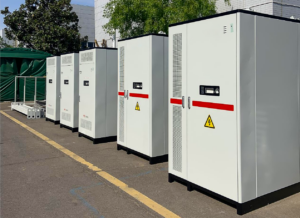
Assessing R&D Depth for Complex Microgrid Deployment
Off-the-shelf equipment rarely aligns with the highly specific electrical requirements of large-scale data centers, EV charging hubs, or heavy industrial manufacturing parks. During your initial assessment, direct your focus toward the supplier’s research and development ecosystem. The ability to successfully navigate unstable power supply scenarios, mitigate power restrictions, or resolve severe phase imbalances hinges entirely on proprietary control algorithms and grid-forming capabilities.
A premier YUNT engineering partnership is anchored by an experienced R&D team. This immense concentration of intellectual capital translates directly into exclusive off-grid and network construction technology that thrives under complex working conditions. This includes ensuring seamless integration with existing factory SCADA and energy management systems, enabling true automated peak-valley arbitrage without manual intervention. When auditing a facility, verify the ratio of dedicated R&D engineers to assembly staff, and scrutinize their capacity for custom topological development. If a supplier cannot demonstrate rapid architectural adaptation to site-specific grid constraints, they will inevitably become a costly bottleneck during commissioning.
Evaluating Throughput Inside the Hybrid Inverter Factory
Procurement managers and supply chain directors are acutely aware that project implementation efficiency relies heavily on hyper-predictable delivery schedules. Unforeseen delays in hardware arrival compound expensive labor costs and push back critical interconnection milestones. Therefore, touring the hybrid inverter factory is absolutely essential for validating the supplier’s mass production maturity.
Look closely for standardized, automated, and modular manufacturing lines. A supplier utilizing standardized hardware modules ensures that even as your commercial storage capacity requirements expand dynamically, the manufacturing process remains scalable. The factory floor layout should clearly reflect a successful transition from slow-build engineering prototypes to streamlined mass production without sacrificing build quality. Furthermore, deeply evaluate their supply chain buffering tactics and component sourcing strategies to ensure they are better prepared to manage potential supply chain disruptions, guaranteeing bulk commercial orders are fulfilled exactly on the projected baseline timeline.
Scrutinizing Quality Assurance for Severe Industrial Environments
Advanced power electronics deployed in commercial solar-plus-storage applications, wind power generation, or remote industrial sites are subjected to unforgiving environmental stress. Airborne particulates, severe ambient temperature fluctuations, and high-vibration profiles rapidly degrade substandard equipment. Your factory inspection methodology must rigorously evaluate the facility’s environmental stress screening protocols and quality assurance testing.
Inquire specifically about the internal mechanical architecture of their power conversion systems. Leading-edge hardware achieves vastly superior long-term durability by actively reducing reliance on mechanical contact designs, which are notoriously prone to physical wear and require frequent maintenance downtime. Furthermore, examine their thermal management testing procedures. Systems engineered to maintain an industry-leading 99% conversion efficiency while operating across an ultra-wide temperature range demonstrate dramatically superior thermal dissipation engineering. This drastically minimizes the amount of energy lost as heat, which directly impacts the project’s daily peak-valley arbitrage profit margins over its lifecycle.
Verifying High Power Density and Global Certification Readiness
Physical footprint is a highly premium commodity in densely populated industrial parks and commercial real estate developments. When actively expanding existing substation capacity, project developers require high-output equipment that meticulously minimizes spatial requirements. During the technical engineering review, closely cross-reference the physical dimensions of the manufactured units with their megawatt output capabilities.
Industry leaders consistently achieve a power density that easily surpasses average competitors by 30% to 40%. This technological leap allows for highly compact installations that do not require massive, disruptive infrastructure overhauls. Equally critical is the strict verification of international regulatory compliance. An audit is fundamentally incomplete without reviewing the manufacturer’s certification portfolio. Confirm that their commercial systems hold active, authoritative grid code certifications from over 20 distinct countries. This comprehensive regulatory compliance ensures helps global distributors reduce technical barriers when expanding into international markets, allowing for seamless grid integration regardless of jurisdiction.
Architecting Resilient Power Solutions for Commercial Scaling
Utility grid constraints and sudden demand charges shouldn’t bottleneck your facility’s expansion. Generic, off-the-shelf hardware rarely handles complex industrial load profiles, leaving your operations vulnerable to unexpected downtime. Contact YUNT today to request a custom microgrid quote engineered for your site’s exact specs. Our high-density PCS solutions protect your power quality, safeguard uptime, and maximize long-term project ROI.