
In modern, high-throughput industrial parks, power stability is directly tied to profitability. Automated manufacturing lines, continuous chemical processing plants, and heavy-duty robotic assembly setups operate within exceptionally tight tolerances. A voltage sag lasting just a fraction of a second can cause variable frequency drives to trip, PLC controllers to reset, and massive batches of raw materials to be ruined. As grid volatility increases and power restrictions become more common in highly industrialized zones, relying on traditional electrical distribution systems is no longer a viable strategy. Forward-thinking EPC contractors and park operations managers are shifting from reactive hazard mitigation to proactive power asset management. Working alongside energy storage innovators like YUNT allows industrial developers to construct resilient, centralized microgrids that shield entire multi-user complexes from grid disturbances while optimizing energy costs.
The Vulnerability of Distributed Loads to Sub-Cycle Power Interruptions
Many commercial facilities rely on localized Automatic Transfer Switches (ATS) installed at individual machinery points. While this distributed approach is functional for slow-reacting loads like HVAC compressors or non-essential lighting, it introduces severe mechanical latency during critical utility events. An electromechanical ATS requires anywhere from 100 to 500 milliseconds to physically swing contacts between the utility feed and a backup generator. For high-precision electronics and sensitive automated machinery, this lag is an operational disaster.
To prevent continuous process interruptions, high-capacity microgrids require solid-state switching at the main distribution point. Deploying a centralized static changeover switch at the primary substation interface helps minimize this latency issue. Utilizing high-speed silicon-controlled rectifiers (SCRs) or thyristors, these systems continuously monitor the incoming phase voltage waveforms. In the event of a phase fault or severe voltage dip, the system executes an off-grid transfer in under 10 milliseconds. This high-speed transition maintains a flat voltage profile across the park’s entire internal grid, ensuring that CNC machines and precision sensors continue operating without a single reboot cycle.
Optimizing Industrial Microgrids with Centralized STS Cabinets
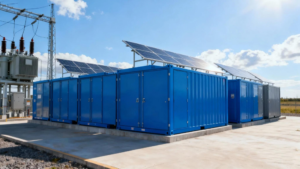
As industrial parks scale their operations, managing a sprawling web of localized, small-scale power backup devices becomes a logistical and maintenance challenge. Centralization is key to maintaining balanced phases and streamlining maintenance schedules. By installing centralized STS cabinets at the main point of common coupling, project developers can isolate the entire facility’s load from the public utility grid instantly. This centralized topology simplifies the integration of megawatt-scale battery energy storage systems (BESS) and distributed photovoltaic arrays.
These high-capacity cabinets are designed for maximum density and scalability. Engineered with a modular rack-mount design, these configurations allow EPC contractors to expand capacity incrementally from 200kW to 1MW in a single cabinet footprint. This modular approach significantly lowers upfront capital expenditure, as system capacity can be scaled in direct alignment with industrial tenant expansion. Furthermore, because these centralized cabinets boast a peak operating efficiency of 99.50%, energy loss is significantly reduced. This high efficiency minimizes heat dissipation within closed substation environments, keeping cooling requirements low and ensuring long-term operational reliability.
Unlocking Financial Returns: Peak-Valley Arbitrage and Substation Upgrades
While the primary engineering objective of a centralized solid-state switch is protecting sensitive operations, the broader commercial objective is driving return on investment (ROI). Industrial facilities consume immense volumes of electricity, often operating under steep demand-charge structures and peak-tariff rates. When integrated with high-efficiency energy storage inverters, the centralized switch becomes an active driver of peak-valley electricity price optimization.
During off-peak night hours when utility rates are lowest, the microgrid’s battery banks are charged. During peak-demand periods, the centralized system seamlessly transitions non-critical factory loads to the local energy storage assets, drastically shaving the industrial park’s utility demand charges. Additionally, this microgrid architecture addresses the persistent challenge of substation capacity constraints. When industrial parks add new production lines, upgrading the primary utility substation is often cost-prohibitive and involves lengthy utility permitting delays. A centralized microgrid acts as an on-site power buffer, executing dynamic capacity expansion to support localized peak demands without exceeding grid connection limits. This strategy allows project developers to bypass expensive substation overhauls, speeding up project timelines while generating consistent monthly operational savings.
Designed for the Harshest Industrial Environments
Deploying sensitive digital power electronics into heavy industrial environments demands exceptional hardware durability. Industrial parks are high-vibration zones characterized by extreme temperature shifts, airborne dust, and fluctuating humidity. To thrive under these demanding conditions, modern centralized switching systems reduce reliance on mechanical contact points. This low-wear design helps reduce contact degradation, minimizing the need for scheduled maintenance and reducing the risk of catastrophic physical switch failures.
With a wide operating temperature range spanning from -40°C to +60°C and a highly durable cabinet housing with advanced ingress protection, these systems deliver stable performance in freezing outdoor substations and hot manufacturing environments. Backed by compliance certifications from over 20 countries, project developers can deploy this infrastructure across global regions with absolute confidence in local grid compliance and regulatory approval.
Develop a Resilient Power Architecture for Your Facility
Transitioning your industrial park’s utility interface to solid-state power switching is the most secure path to ensuring operational continuity and lowering long-term energy overhead. The expert engineering team at YUNT is ready to collaborate on your next project, delivering highly tailored microgrid topologies and customized engineering quotes within 72 hours. Contact YUNT today to design a robust, high-efficiency power architecture that protects your industrial assets and drives sustainable ROI.