
In commercial and industrial energy storage, small differences in conversion efficiency can become significant over years of continuous operation. When selecting an energy storage converter or MPPT module, project developers may see figures such as 97.5% and 98.5% on a datasheet and consider a 1% difference insignificant. In practice, the accumulated impact of that difference can affect both energy utilization and the thermal load of the equipment. For projects comparing energy storage inverter company, efficiency should therefore be considered together with long-term operating conditions.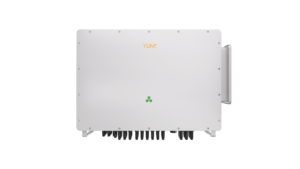
The Overlooked Loss: An “Energy Black Hole” During Long-Term Charging and Discharging
When selecting energy storage converters and MPPT modules, many project developers see conversion efficiency figures such as 97.5% and 98.5% on datasheets and may not think much of a 1% difference, assuming that such a small gap has little practical significance.
However, in commercial and industrial energy storage projects, this 1% can become a major “energy black hole.” C&I energy storage systems perform high-frequency, high-power charging and discharging cycles day after day for years. Even a small loss can accumulate continuously over a lifecycle of 10 to 15 years, directly consuming hundreds of thousands of kilowatt-hours of electricity that could otherwise be converted into financial value.
More importantly, the lost electrical energy does not simply disappear. It is converted into waste heat. The additional heat can significantly increase the load on the equipment’s internal air-conditioning or liquid-cooling system, which in turn consumes more auxiliary power. This can further reduce the system’s overall round-trip efficiency (RTE).
YUNT’s Solution: Advancing Through the Application of SiC Power Devices
In high-end commercial and industrial energy storage and microgrid projects, efficiency is no longer just an attractive number printed in a brochure. It tests the underlying strength of the power electronics architecture. Fundamentally improving efficiency requires pushing the performance of power devices, topology, high-frequency drive systems, and magnetic components.
YUNT has taken the initiative to introduce next-generation semiconductor materials into its microgrid electrical hub. Our Mercury series MPPT modules use SiC (silicon carbide) power devices throughout. Compared with conventional silicon (Si) IGBT devices, silicon carbide has highly advantageous physical properties. Its low on-state resistance allows it to operate at very high switching frequencies while keeping switching losses extremely low.
As a result, Mercury modules can reduce energy losses during the conversion process while significantly reducing the size of passive magnetic components. The modules achieve a maximum conversion efficiency of 99.2%.
For projects evaluating power conversion modules, this type of power-device architecture is directly related to conversion efficiency and the thermal performance of the overall system.
Two Benefits: Higher Energy Yield and Improved Thermal Stability
Conversion efficiency approaching the physical limit can provide customers with two significant practical benefits.
First, less energy lost during conversion.
More solar-generated electricity can be delivered to the battery array or factory loads with less energy lost along the way. Over the full lifecycle, the additional energy yield can exceed the initial difference in equipment cost.
Second, a sharp reduction in waste heat.
The substantial reduction in heat generated by the power devices greatly reduces the thermal-management pressure on the entire machine. This allows the equipment to continue operating at full load even in extremely hot summer conditions while helping extend the service life of sensitive internal components.
As a microgrid electrical hub solution provider, YUNT Power’s practical projects have expanded across the world. Our equipment and solutions have successfully served projects in Europe (the UK, Germany, Spain, Italy, the Netherlands, Belgium, Switzerland, Austria, the Czech Republic, Slovenia, Romania, Bulgaria, Moldova, Ukraine, Poland, Lithuania, Latvia, Estonia, Finland, Sweden, Denmark, Hungary, and Cyprus), Africa (South Africa, Nigeria, Zambia, Zimbabwe, Madagascar, and Cameroon), the Middle East and Asia-Pacific (Yemen, Jordan, Palau, India, Myanmar, South Korea, Thailand, Vietnam, Malaysia, Singapore, and the Philippines), and South America (Brazil), covering dozens of countries.
We provide a complete engineering foundation that includes modular PCS hardware, EMS dispatch logic, load-splitting solutions, and system electrical topology. Customers can leverage their own local delivery capabilities and resources while entrusting the underlying power conversion and control challenges to us, enabling the delivery of resilient energy systems that balance economics and high reliability.
When efficiency and thermal performance need to be considered over years of operation, the underlying power-device architecture becomes an important part of the project discussion. YUNT can discuss the relevant configuration with project partners based on their application and operating conditions. Contact our team via WhatsApp (+86 137 1503 3530) to share your project requirements.