
For energy storage equipment entering overseas markets, successful hardware development is only the beginning. EPC contractors, distributors, and project developers often treat compliance certification and grid-code testing as essential conditions for project delivery. Without the right certifications and local grid compatibility, even technically capable equipment can face delays, additional costs, or difficulties during project acceptance.
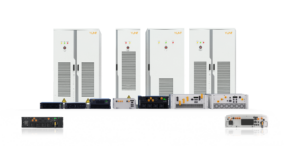
The Hidden Barrier: The Compliance Risks of Uncertified Equipment
Successfully developing and commissioning the hardware only means completing a small step in the product lifecycle. It does not mean the equipment can simply be packed and shipped overseas for deployment. When global EPC contractors, distributors, and project developers select equipment, they often regard compliance certification as a critical red line, alongside power and efficiency.
For manufacturers targeting overseas markets, certifications such as those required by CE certification energy storage inverter manufacturers can form part of the compliance foundation for market entry. Without compliance certifications recognized by the target country, a project can face problems across the entire delivery chain:
- Customs clearance:Equipment may be held at the port because the required documentation or certification is missing, resulting in substantial storage costs.
- Grid connection:Local distribution system operators (DSOs) may prohibit grid connection without the required compliance documentation, potentially resulting in significant penalties.
- Project acceptance:The project owner may have the right to reject final acceptance, leaving the EPC contractor unable to recover the remaining project payment.
Some low-end manufacturers treat obtaining a certification certificate simply as a promotional asset for marketing materials. However, EPC teams with extensive field experience understand that reliable certification and grid-code testing are fundamental safeguards against major compliance risks.
YUNT Solution: A Global Grid Adaptation Pool Built on Rigorous Testing
International third-party organizations such as TÜV and SGS issue test reports, while international safety standards such as IEC 62477-1 define the baseline requirements for power electronic equipment. These requirements cover critical design areas including high-voltage insulation, short-circuit fault ride-through, and resistance to harsh operating environments.
However, obtaining basic certification does not mean that a device can automatically operate across every global market. Different national power grids can have very different requirements for voltage fluctuation tolerance, system frequency, low-voltage and high-voltage ride-through curves (LVRT/HVRT), and anti-islanding protection logic.
Our understanding of the highly complex operating conditions of overseas grids is built on three core capabilities:
Real-World Operating Data:
Across global projects, we have collected extensive real-world data through field measurements, including weak-grid voltage dips, short-circuit ratios, high-frequency harmonics, and the dynamic characteristics of diesel generator startup. These real-world operating conditions feed back into our algorithm development rather than relying solely on theoretical standards developed in isolation.
Fully Parameterized Configuration:
Our PCS firmware supports highly flexible configuration and adjustment of protection thresholds and droop coefficients. At the hardware level, dedicated isolation transformers can be selected as required. The system can support 208V/230V configurations, connect to 400V/480V systems, and even interface directly with medium- and high-voltage distribution networks from 11kV to 33kV.
A Full Certification-to-Deployment Loop:
We work with EPC teams during the early project stage to provide detailed grid-connection assessments and assist with calculating compliant protection settings. If unexpected grid-code conflicts occur on site, our firmware team can rapidly complete algorithm adaptation and verification based on field waveforms, helping resolve grid-connection compatibility issues.
As a microgrid electrical hub solution provider, YUNT Power has accumulated practical project experience across global markets. Our equipment and solutions have successfully served projects in dozens of countries, including Europe (the United Kingdom, Germany, Spain, Italy, the Netherlands, Belgium, Switzerland, Austria, the Czech Republic, Slovenia, Romania, Bulgaria, Moldova, Ukraine, Poland, Lithuania, Latvia, Estonia, Finland, Sweden, Denmark, Hungary, and Cyprus), Africa (South Africa, Nigeria, Zambia, Zimbabwe, Madagascar, and Cameroon), the Middle East and Asia-Pacific (Yemen, Jordan, Palau, India, Myanmar, South Korea, Thailand, Vietnam, Malaysia, Singapore, and the Philippines), and South America (Brazil).
For overseas projects, this experience is supported by a complete engineering foundation covering modular PCS hardware, EMS dispatch logic, load splitting solutions, and system electrical topology. Energy storage system supplier capabilities can be integrated into project planning where certification, grid requirements, and system configuration need to be considered together.
Customers can leverage their own local delivery capabilities and resources while leaving complex underlying power conversion and control challenges to us. This approach supports the delivery of resilient energy systems that balance economic performance with high reliability.
When certification, grid compatibility, and field implementation all need to work together, YUNT can support project teams from the technical assessment stage through deployment. Share your target market, grid requirements, and project conditions with our team via WhatsApp (+86 137 1503 3530) so we can discuss the relevant configuration and compliance considerations.