
As manufacturing expands across Vietnam and other Southeast Asian countries, more factories are installing large rooftop photovoltaic arrays to meet their energy needs. Yet increasing PV capacity can create a new operational challenge when solar generation does not match the factory’s load profile. Energy storage system solutions can help bridge this gap by coordinating PV generation, battery storage, factory loads, and grid power in real time.
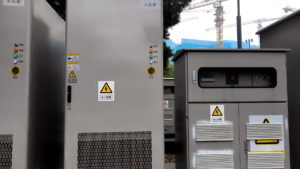
With the rise of manufacturing in Vietnam and other Southeast Asian countries, many factories have installed large-scale rooftop photovoltaic arrays. However, a critical engineering conflict soon emerges: the factory’s electricity demand curve can be seriously mismatched with the timing of PV generation. During the midday period when sunlight is strongest and PV generation reaches its peak, factories are often at lunch or operating at lower loads, meaning the site cannot fully consume the electricity being generated.
An even more challenging issue is that some regional grids in Vietnam and other areas impose extremely strict restrictions on reverse power flow from industrial users, including surplus electricity exports to the grid. In some cases, the tolerance for reverse power flow is effectively zero. When excess PV electricity flows back into the grid, grid protection equipment can trigger forced PV curtailment and directly shut down the PV inverter.
As a result, photovoltaic assets that companies have invested heavily in can be forced offline during the hours of strongest sunlight, creating substantial investment losses.
YUNT Solution: DC Coupling and Millisecond-Level Reverse Power Control
Preventing reverse power flow is not simply a matter of installing an electricity meter at the point of grid connection. It requires real-time closed-loop power scheduling among the PV system, energy storage, loads, and grid. YUNT advocates an efficient DC-coupled microgrid architecture.
Seamless DC power integration: The MPPT connects directly to the DC bus, allowing surplus DC electricity from the PV system to flow directly into the battery. This eliminates one DC-AC-DC conversion stage and significantly improves energy utilization efficiency.
Millisecond-level closed-loop reverse power control: Supported by a powerful EMS, the system monitors the direction of power flow at the point of common coupling (PCC) at a very high frequency. Once a reverse power flow trend is detected, the system instructs the PCS within tens of milliseconds to increase the battery charging power. If the battery is already full, the system precisely controls the MPPT to suppress PV output, ensuring zero reverse power flow to the grid throughout the process.
Full self-consumption: At night or during the evening peak, the PCS releases the stored solar energy to the factory, turning the solar power that would otherwise have been wasted during the day into tangible electricity cost savings.
For this type of application, PV charge controller technology provides an important link between PV generation and the DC-coupled energy storage architecture.
Customized AC-DC Integrated Architecture
To address this challenge, we provide an electrical hub design with advanced dispatch capabilities, using a high-power PCS cabinet together with an independent MPPT control cabinet.
Through rapid communication at the hardware level, PV control and energy storage power conversion operate under the coordination of the same “brain.” Regardless of how sharply the factory load fluctuates, the system can maintain smoother power flow on the grid side and effectively avoid PV generation losses caused by grid reverse-power restrictions.
As a provider of microgrid electrical hub solutions, YUNT Power has accumulated practical project experience across global markets. Our equipment and solutions have been successfully deployed in dozens of countries across Europe, including the United Kingdom, Germany, Spain, Italy, the Netherlands, Belgium, Switzerland, Austria, the Czech Republic, Slovenia, Romania, Bulgaria, Moldova, Ukraine, Poland, Lithuania, Latvia, Estonia, Finland, Sweden, Denmark, Hungary, and Cyprus; Africa, including South Africa, Nigeria, Zambia, Zimbabwe, Madagascar, and Cameroon; the Middle East and Asia-Pacific, including Yemen, Jordan, Palau, India, Myanmar, South Korea, Thailand, Vietnam, Malaysia, Singapore, and the Philippines; as well as South America, including Brazil.
We provide a complete engineering foundation covering modular PCS hardware, EMS dispatch logic, load-splitting solutions, and system electrical topology. Customers can focus on their local delivery capabilities and resources while relying on us to address the underlying challenges of power conversion and control, making it easier to deliver resilient energy systems that balance economic efficiency with high reliability.
If a factory’s PV output is being limited by its daytime load or grid export restrictions, YUNT can help connect the pieces—from PV control and storage conversion to real-time power scheduling. Contact us through WhatsApp (+86 137 1503 3530) with your project conditions and power requirements to discuss the appropriate architecture.